
Article by
Lee and Stuart
Lee Stancer & Stuart Allen – Kobb Interiors Ltd
Lee Stancer and Stuart Allen are the directors of Kobb Interiors Ltd, a Harrogate-based interiors company specialising in the design and installation of bespoke kitchens, bedrooms, home offices, and shutters. With a shared passion for craftsmanship and modern, thoughtfully designed spaces, they combine creative vision with practical expertise to deliver high-quality, tailored interiors.
Lee focuses on design, client experience, and brand direction, bringing a warm, contemporary style to each project. Stuart complements this with strong technical knowledge and project delivery, ensuring every detail is executed to the highest standard.
Together, they have built Kobb Interiors into a trusted destination showroom, offering premium products including solid surfaces as a Cosentino Elite partner, as well as leading appliance, tap, and furniture solutions. Their collaborative approach ensures every space is both beautiful and functional, designed to enhance the way their clients live.
Can a kitchen truly honour a 19th-century soul while housing the high-performance technology of the 21st? Many homeowners in North Yorkshire feel a sense of trepidation when considering a renovation, fearing that a modern update might clash with the architectural integrity of their heritage property. You likely value the character of your uneven stone walls and original cornicing, yet you shouldn't have to compromise on the functional utility of a contemporary space. Designing a kitchen for a period home is a delicate act of balance; it's about creating a dialogue between the past and the present.
For homeowners who wish to extend this bespoke approach to their entire property, the Appreciation Project offers remote interior design consultancy that focuses on creating cohesive, soulful spaces that respect architectural heritage.
We believe your home should be a sanctuary where craftsmanship and longevity matter more than passing trends. This guide explores how to transform your historic space into a masterpiece of bespoke luxury, ensuring your kitchen feels like a natural extension of your home's narrative. We'll examine how to integrate premium appliances from brands like AEG and Smeg within traditional cabinetry, navigate the intricacies of historic layouts, and select tactile materials like Silestone or European Oak that age with grace. Discover how a thoughtful restoration can elevate both your daily experience and your property's enduring value.
Key Takeaways
- Understand the philosophy of sympathetic innovation to create a space that respects historic architecture while serving modern, functional living.
- Identify the unique nuances of Georgian, Victorian, and Edwardian styles to ensure your renovation aligns perfectly with the original era of your property.
- Explore how designing a kitchen for a period home requires a careful selection of tactile materials that offer contemporary performance without sacrificing heritage charm.
- Learn how to navigate structural challenges like uneven walls and historic chimney breasts through the use of bespoke cabinetry and intelligent layout planning.
- Discover the value of a managed, customized approach in harmonizing high-end technology with the soulful atmosphere of a traditional Yorkshire home.
The Philosophy of Designing a Kitchen for a Period Home
Designing a kitchen for a period home is rarely about simple replication; it's about the art of sympathetic innovation. In the historic residences of North Yorkshire, from the limestone cottages of the Dales to the grand terraces of Harrogate, the goal is to create a space that feels inevitable. This philosophy rejects the idea that modern life must be forced into a historic shell. Instead, we seek a quiet equilibrium where 19th-century architecture and 21st-century functional luxury exist in a shared state of grace. Heritage is a living thing, and your kitchen should reflect a narrative that spans centuries.
To better understand the visual balance required for these unique spaces, watch this helpful video on essential kitchen features:
Reflecting on the evolution of the kitchen reveals how these spaces have transitioned from hidden service rooms to the emotional heart of the home. Today, the kitchen serves as a sanctuary. It's a place of ritual and rest, requiring a design that respects the past while providing the effortless utility expected in a premium modern environment. Every element must be purposeful, ensuring the room remains a calm retreat amidst the complexities of contemporary life.
The Emotional Resonance of Heritage Spaces
Authentic design listens to the room. A well-considered layout respects the original soul of the space, acknowledging that a kitchen in a Georgian or Victorian home carries a narrative of its own. Tactile materials are essential here. The cool touch of a quartz worktop or the organic grain of solid wood cabinetry provides a sensory connection to the home’s history. Consider how light progresses through traditional sash windows; it doesn't just illuminate, it shapes the atmosphere throughout the day. Your design must respond to these shifts, ensuring the room feels warm at breakfast and serene by candlelight.
Bespoke vs. Off-the-Shelf in Historic Homes
Standard, mass-produced units often struggle within the unique constraints of a heritage building. When you're dealing with uneven Yorkshire stone floors or delicate lath-and-plaster walls, a "one size fits all" approach leads to awkward gaps and wasted potential. In this context, Kobb Interiors Bespoke Kitchens are a necessity rather than a luxury. Custom-built cabinetry allows us to maximize high ceilings with tall, elegant cupboards and transform difficult alcoves into purposeful storage. Designing a kitchen for a period home requires this level of precision, ensuring that the new installation feels like a natural, permanent extension of the original architecture.
Respecting the Era: Georgian, Victorian, and Edwardian Nuances
Harrogate and York are defined by a rich tapestry of architectural history. Each property era carries a distinct personality, and successful design requires a deep understanding of these historical signatures. When you are designing a kitchen for a period home, the goal is to enhance these original features rather than overshadow them. Whether your home features the rigid symmetry of the Georgians or the airy openness of the Edwardians, your kitchen should feel like it has always belonged there.
Georgian Elegance and Symmetry
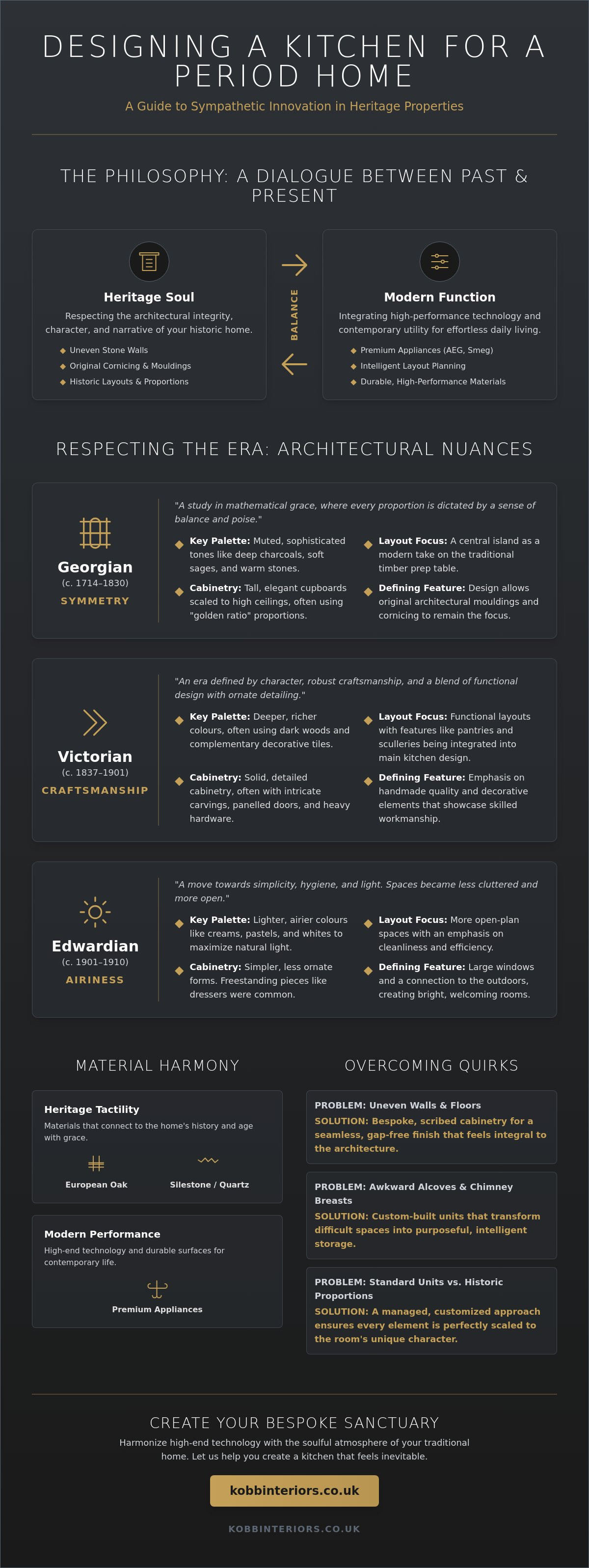
Symmetry is the anchor. Georgian architecture is a study in mathematical grace, where every proportion is dictated by a sense of balance and poise. In a Georgian kitchen, we often employ the "golden ratio" to ensure cabinetry is perfectly scaled to the room's high ceilings. Muted, sophisticated palettes such as deep charcoals, soft sages, or warm stones work beautifully here, allowing the architectural mouldings to remain the focus. A central island serves as a refined, modern interpretation of the traditional timber prep table, providing a functional heart that respects the room's formal origins.
Victorian Character and Craftsmanship
Victorian homes shifted toward a more robust, practical sense of luxury. This era celebrated the visible marks of craftsmanship. In-frame construction is the definitive choice for this period; it offers a sense of permanence and structural integrity that modern "lay-on" doors cannot replicate. Integrating a deep ceramic Butler sink and tactile, hand-finished ironmongery adds to the authentic, built-to-last atmosphere. Our range of 1909 kitchens is particularly adept at capturing this Victorian spirit, blending traditional bead details with the smooth, durable finishes required for contemporary life.
Edwardian Light and Flow
Edwardian design marked a departure toward brightness and social connectivity. As the 20th century dawned, kitchens began to feel lighter and more integrated with the rest of the home. To honour this, we often recommend glazed cabinetry and lighter timber accents to reflect the natural light flooding in from garden-facing windows. If you're undertaking a period conversion, integrating a breakfast bar into a larger island can create a social hub without disrupting the room's uncluttered serenity. Exploring our project gallery may provide the visual inspiration needed to identify which era resonates most with your personal aesthetic.
Designing a kitchen for a period home is a journey through time. By acknowledging the specific architectural language of your property, we can create a space that is both a functional sanctuary and a faithful tribute to Yorkshire's heritage. Every handle, hinge, and cupboard door is a deliberate choice in maintaining this historical equilibrium.
Material Selection: Balancing Heritage Aesthetics with Modern Durability
Selecting the right palette of materials is a defining moment in the creative process. When designing a kitchen for a period home, the choice of surface and substrate dictates whether the space feels like a museum or a functional sanctuary. Physical surfaces carry an emotional weight; the cool touch of stone and the organic warmth of hand-painted timber create a layered, sensory narrative. Longevity is the true hallmark of luxury, and in a heritage setting, this means choosing materials that age with grace rather than those that simply follow a trend. Hardware, too, requires a discerning eye. Handles and hinges should never feel like an afterthought; instead, opt for solid brass or hand-forged ironmongery that appears to have been found through years of curation rather than bought from a modern catalogue.
Worktops: Natural Stone vs. Luxury Composites
Marble has long been the aesthetic standard for the English country kitchen, prized for its dramatic veining and historical authenticity. However, its porous nature can be a challenge for a busy family home. Modern luxury composites like Silestone and Dekton offer a sophisticated alternative, providing the visual depth of natural stone with vastly superior durability. Dekton is particularly well-suited for period homes where a range cooker serves as the focal point. Its exceptional heat resistance allows for a seamless transition between cooking and preparation areas without the risk of thermal shock. For a more detailed technical breakdown of these surfaces, you can explore our Dekton vs Silestone comparison to see which material best serves your specific needs.
Invisible Integration of Modern Appliances
The primary challenge in designing a kitchen for a period home is the integration of high-performance technology without disrupting the room's historic rhythm. We favour a strategy of "invisible integration," where modern essentials are cleverly concealed. High-specification AEG appliances or Smeg ovens can be housed behind bespoke 1909 cabinetry frontages, ensuring the visual continuity of the room remains unbroken. This allows you to enjoy the precision of induction cooking or the convenience of integrated refrigeration while maintaining a traditional aesthetic. The Quooker tap is another modern essential that bridges this gap perfectly. When paired with a classic ceramic sink, its timeless spout design conceals a wealth of 21st-century utility, providing instant boiling water without the clutter of a kettle. This balance ensures your kitchen remains a high-functioning environment that never loses its soulful, heritage charm.
Overcoming Structural Quirks: Layouts for Yorkshire Period Properties
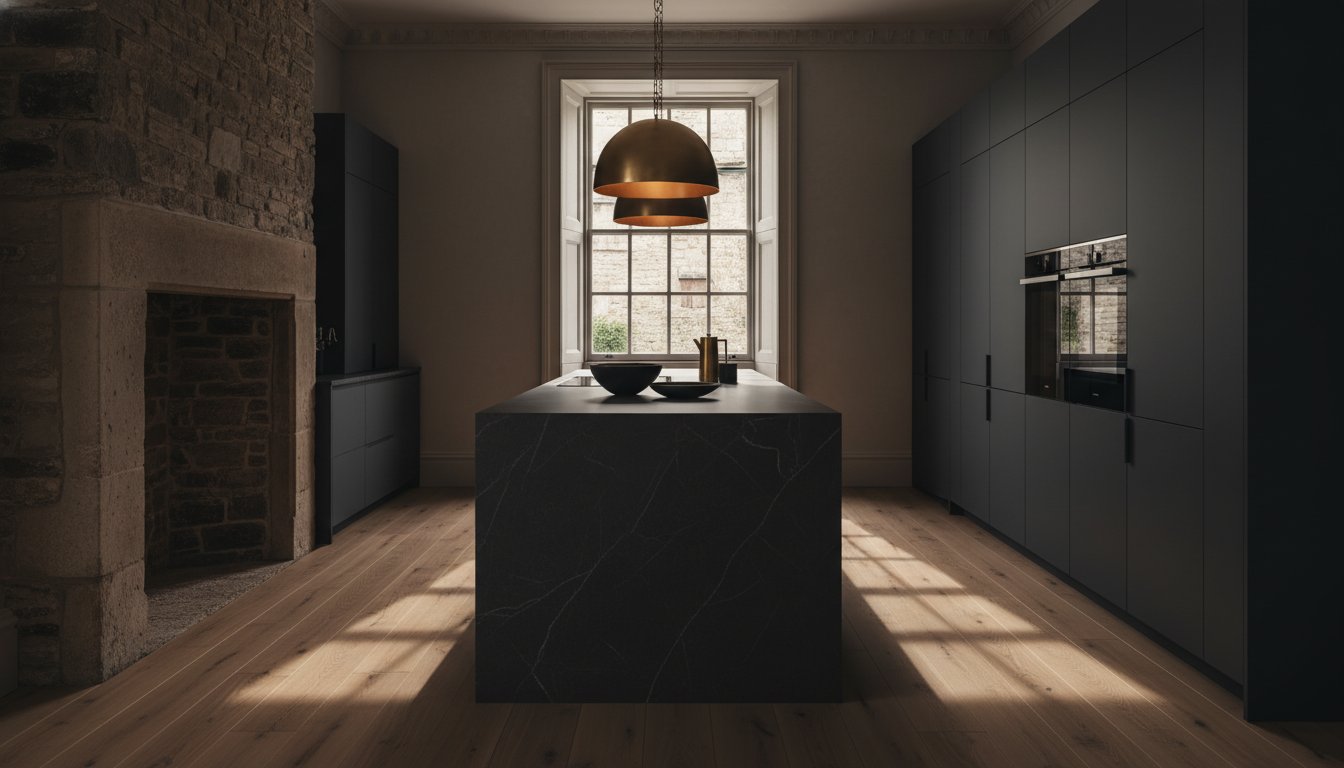
Period buildings in Harrogate and York are rarely defined by right angles. Their walls often possess a wandering logic, and their floors tell stories of centuries of settling. Designing a kitchen for a period home in North Yorkshire requires more than just an eye for style; it demands a deep respect for these architectural eccentricities. Rather than fighting against low-hanging beams or original Yorkshire stone flagstones, we treat them as anchor points for a layout that feels intentional and serene. The goal is to move away from the rigid "work triangle" of the past toward a modern "zone" approach that accommodates multi-functional living without disrupting the room's historic equilibrium.
The Chimney Breast Challenge
In many heritage properties, the chimney breast was once the literal source of heat and sustenance. Today, we transform these traditional hearths into sophisticated cooking focal points. This requires technical finesse, particularly when integrating high-performance extraction units. We design bespoke housings that sit flush within the masonry, ensuring that modern ventilation doesn't break the visual line of the original architecture. The alcoves flanking a chimney breast offer an ideal opportunity for bespoke shelving or hidden pantry storage. These "found" spaces are perfect for housing breakfast stations or coffee bars, keeping the main worktops clear and maintaining a sense of uncluttered calm.
Navigating Uneven Spaces
Yorkshire stone floors are a hallmark of regional heritage, yet their undulating surfaces present a significant challenge for standard cabinetry. Achieving a level finish in a "wonky" room is where the value of bespoke craftsmanship becomes most apparent. We use a technique called scribing, where each plinth and side panel is hand-cut to follow the exact contour of your floor and walls. This creates a seamless connection between the new installation and the historic structure. High ceilings, common in Georgian and Victorian terraces, also allow us to maximize vertical space. Custom-height wall units can be designed to reach toward the cornicing, providing ample storage while drawing the eye upward to appreciate the room's grand proportions.
When we approach these structural puzzles, we don't see obstacles; we see opportunities for unique, customized solutions that a standard kitchen simply cannot provide. You can see how we have harmonized these historic features in our Kobb Interiors Gallery, which showcases real-world examples of Yorkshire renovations. If you're ready to see how your home's unique character can be elevated through thoughtful, expert design, we invite you to start your kitchen design journey with us today. Every quirk of your property is a chance to create a kitchen that is entirely, beautifully your own.
Creating Your Bespoke Sanctuary with Kobb Interiors
At Kobb Interiors, we believe in the power of quiet confidence. Our design philosophy is rooted in a sense of restrained high-end aesthetics, where every element is chosen to enhance the existing architecture rather than dominate it. With 40 years of experience navigating the unique structural landscapes of North Yorkshire, we've developed a profound understanding of how to treat historic spaces with the reverence they deserve. We don't just install cabinetry; we curate environments that serve as a serene sanctuary for modern life. To truly understand the texture of our work, we invite you to visit our Harrogate showroom. Here, you can experience the tactile quality of our physical surfaces and the subtle depth of our color compositions firsthand.
Designing a kitchen for a period home is a journey that requires a trusted collaborator. It's about finding an equilibrium between the physical structure of a 19th-century building and the emotional impact of a 21st-century home. Our role is to act as a knowledgeable creator, guiding you through the selection of organic substances and meticulous details that will define your space for decades to come. This steady, expert hand ensures that your renovation doesn't just look beautiful upon completion but continues to convey a narrative of quality and longevity as it ages.
A Collaborative Design Journey
Your home has a narrative that began long before you moved in. Before we draw a single line, our design team listens to the story your property tells. We consider the way light moves through the original windows and the physical traces of the building's past. This personal, detail-oriented approach ensures the final result feels like a natural extension of your home's history. Beyond the creative vision, we provide full project management to handle the complexities inherent in period renovations. From the initial concept to the final professional installation, we manage the intricate details so you don't have to. It's about providing peace of mind through every stage of the transformation, ensuring a seamless transition from a historic shell to a functional masterpiece.
Flexible Investment Options
A bespoke kitchen is a significant investment in both your daily wellbeing and your property's long-term value. Authentic restoration, when executed with a refined hand, ensures your home remains a timeless asset that transcends passing trends. To help you achieve this vision without compromise, we offer flexible finance options via Novuna, allowing you to prioritize the craftsmanship and materials your home deserves. Designing a kitchen for a period home is a rare opportunity to leave your own mark on a historic narrative. When you're ready to begin, we invite you to book a design consultation and discover how we can harmonize your home's heritage with the luxury of functional innovation.
Embracing the Future of Your Heritage Home
Honouring the architectural soul of a property while integrating the effortless utility of modern technology is a profound creative act. We've explored how the formal symmetry of Georgian layouts, the robust craftsmanship of Victorian design, and the airy flow of Edwardian spaces provide a unique framework for personal expression. Designing a kitchen for a period home isn't merely about aesthetic restoration; it's about creating a living sanctuary that values tactile quality and long-term durability in equal measure. By choosing premium materials and concealing high-performance technology from brands like AEG and 1909, you ensure your space remains both functional and soulful.
With over 40 years of experience across North Yorkshire, we understand that a successful renovation requires meticulous attention to detail and comprehensive project management. Our team is dedicated to guiding you through every intricate structural challenge and material selection with a refined, steady hand. We invite you to begin your period kitchen transformation with a bespoke design consultation. Let's work together to create a space that feels like a natural, timeless extension of your home’s story.
Frequently Asked Questions
How do I choose a kitchen style that matches my home’s era?
Identify the dominant architectural hallmarks of your property to guide your choice. Georgian homes benefit from the formal symmetry of in-frame cabinetry, while Victorian residences often suit the robust, practical elegance of the 1909 range. Edwardian properties, with their emphasis on light and social flow, work beautifully with glazed units and lighter timber accents that reflect the era's transition toward open-plan living.
Can I have a kitchen island in a small Victorian kitchen?
You can certainly integrate an island into a smaller Victorian space by opting for a bespoke, scaled design. Instead of a standard large unit, we often design narrow "prep table" style islands that respect the room's proportions while providing modern utility. This ensures the kitchen remains a functional sanctuary without feeling cluttered or restricted by the original footprint of the home.
Do modern appliances look out of place in a period home?
High-performance technology doesn't have to disrupt the historic rhythm of your home. Designing a kitchen for a period home often involves "invisible integration," where we house premium AEG or Smeg appliances behind bespoke cabinetry frontages. This allows you to enjoy 21st-century precision and convenience while maintaining a visually consistent heritage aesthetic throughout the room.
What are the best colours for a Georgian-style kitchen?
Sophisticated, muted tones are most effective for enhancing the grand proportions and high ceilings of a Georgian room. We recommend palettes of deep charcoal, soft sage, or warm stone to complement original plasterwork and sash windows. These colours provide a serene backdrop that allows the architectural symmetry and formal poise of the cabinetry to remain the primary focal point.
How do I handle original features like chimney breasts and beams?
Original features should be treated as anchor points that define the room's character rather than obstacles to be hidden. We often transform a traditional chimney breast into a dedicated cooking zone with integrated extraction, while low-hanging beams can be used to frame bespoke shelving. This approach ensures the new design feels like a natural, intentional extension of the building's historic soul.
Is bespoke cabinetry necessary for an old house with uneven walls?
Bespoke cabinetry is essential for achieving a level, seamless finish in homes with uneven Yorkshire stone floors or wandering lath-and-plaster walls. Standard off-the-shelf units cannot account for the unique, non-standard contours of an old building. Our craftsmen use precise scribing techniques to ensure every plinth and panel follows the exact line of your historic structure, creating a sense of quiet permanence.
How long does a bespoke kitchen installation typically take in a period property?
The duration of an installation varies based on the complexity of the architectural challenges and the level of customisation required. While a simple replacement is faster, a bespoke renovation in a period property requires a measured, careful pace to ensure structural integrity and a refined finish. We provide full project management to oversee every detail, ensuring the process remains seamless and stress-free for the homeowner.
What are the most durable worktops for a traditional-looking kitchen?
Modern luxury composites like Silestone and Dekton offer the most durable solution for those seeking a traditional aesthetic. These materials provide the tactile beauty and dramatic veining of natural marble but are engineered to resist staining, scratching, and heat. Dekton is particularly favoured in period homes for its ability to withstand the high temperatures of range cookers, making it a purposeful choice for a high-functioning environment.
Finance Available
* Kobb Interiors Ltd is an Introducer Appointed Representative of Ideal Sales Solutions Ltd, t/a Ideal4Finance. Ideal Sales Solutions Ltd is a credit broker and not a lender (FRN 703401). Finance available subject to status. The rate offered is always provisional and will depend upon your personal circumstances, the loan amount and the term.


