
Article by
Lee and Stuart
Lee Stancer & Stuart Allen – Kobb Interiors Ltd
Lee Stancer and Stuart Allen are the directors of Kobb Interiors Ltd, a Harrogate-based interiors company specialising in the design and installation of bespoke kitchens, bedrooms, home offices, and shutters. With a shared passion for craftsmanship and modern, thoughtfully designed spaces, they combine creative vision with practical expertise to deliver high-quality, tailored interiors.
Lee focuses on design, client experience, and brand direction, bringing a warm, contemporary style to each project. Stuart complements this with strong technical knowledge and project delivery, ensuring every detail is executed to the highest standard.
Together, they have built Kobb Interiors into a trusted destination showroom, offering premium products including solid surfaces as a Cosentino Elite partner, as well as leading appliance, tap, and furniture solutions. Their collaborative approach ensures every space is both beautiful and functional, designed to enhance the way their clients live.
Can a kitchen truly serve as a sanctuary if the mechanical pulse of a refrigerator disrupts the rhythmic silence of your cabinetry? You likely desire the quiet elegance of a seamless, minimalist aesthetic, yet the fear of compromising bespoke units during a future repair often lingers. It is a delicate balance to strike. Understanding the specific integrated appliance pros and cons is the first step toward ensuring your kitchen remains a masterpiece of both form and function.
We understand that choosing between a hidden panel and a traditional built-in unit can feel complex, especially when considering the longevity of your investment. You deserve to feel confident that your choice of premium brands like AEG or Smeg will be supported by precise installation and proper ventilation. This 2026 guide clarifies the terminology that often causes confusion and addresses the practicalities of appliance sizing within custom frames. We will walk through the technical requirements and aesthetic trade-offs, providing the clarity you need to protect your cabinetry while achieving a refined, contemporary space that feels both intimate and highly functional.
Key Takeaways
- Distinguish between fully integrated and built-in units to ensure your bespoke kitchen maintains a seamless, undisturbed visual flow.
- Weigh the essential integrated appliance pros and cons to balance your desire for a minimalist sanctuary with the practicalities of long-term maintenance.
- Discover how concealed appliances maximize floor space while preserving the unique architectural integrity of period properties in Harrogate and Ripon.
- Learn why pairing premium brands like AEG or Smeg with 1909 cabinetry creates a harmonious equilibrium between modern performance and timeless craftsmanship.
- Understand the vital role of professional project management in navigating complex ventilation requirements and protecting your bespoke cabinetry investment.
The Aesthetic vs. Practicality Debate: What Are Integrated Appliances?
Silence has its own texture in a well-designed home. In 2026, the kitchens of North Yorkshire are evolving into quiet sanctuaries where the heavy machinery of daily life is felt through performance, not seen through clutter. This shift toward the "invisible kitchen" defines the current landscape of bespoke design. An integrated appliance is essentially a piece of technology that wears the skin of your furniture. It sits entirely flush within the cabinetry, hidden behind a bespoke door that matches the rest of your kitchen units. This creates a continuous surface that honours the architecture of the room rather than breaking it.
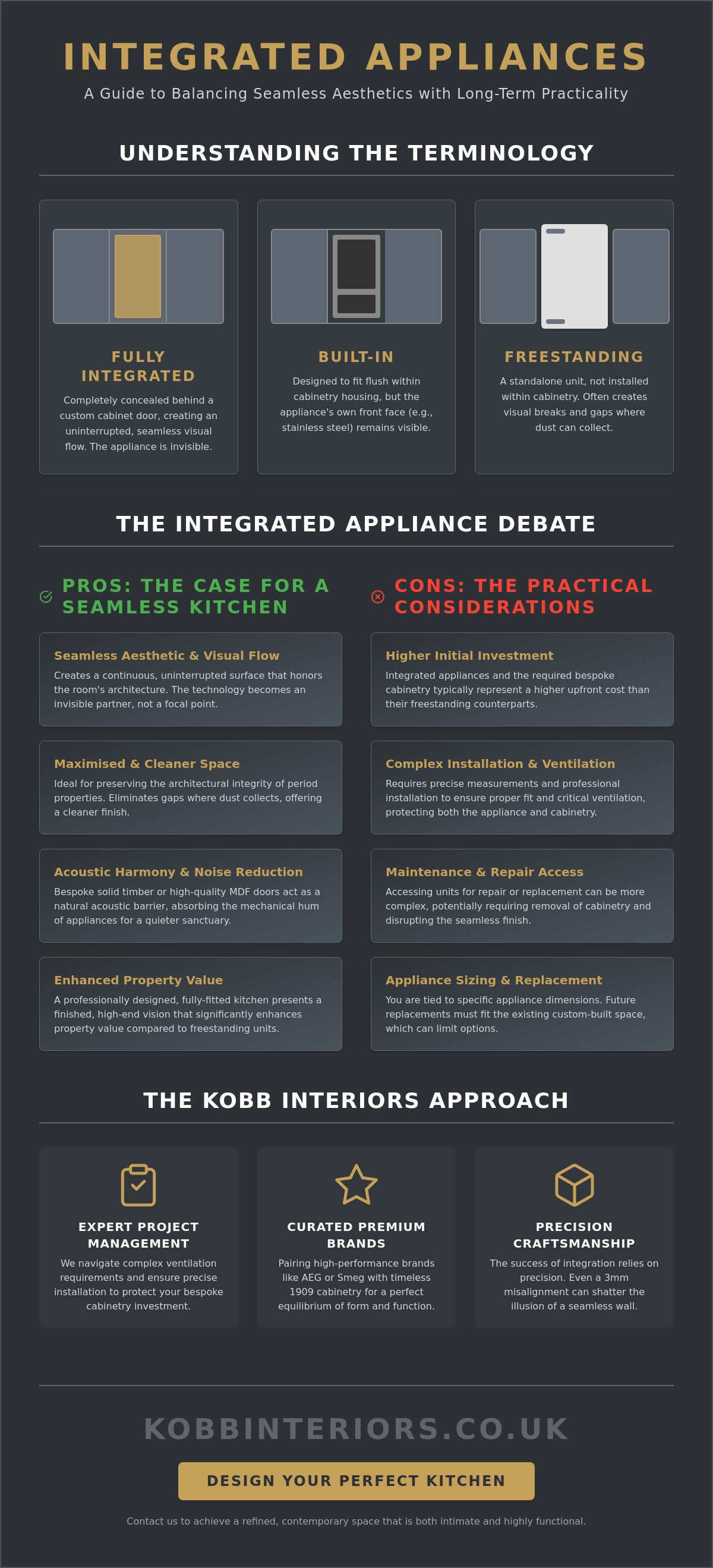
To truly understand What Are Integrated Appliances?, one must look past the utility and toward the architectural intent. While a "built-in" unit is recessed into a tall housing unit but keeps its stainless steel or glass face visible, a fully integrated unit disappears. This distinction is vital for those seeking a truly minimalist environment. As you weigh the integrated appliance pros and cons, the aesthetic clarity often emerges as the primary driver. We frequently integrate a wide range of essentials to maintain this visual calm:
- Tall fridge-freezers that blend into a larder run.
- Dishwashers that masquerade as standard base cabinets.
- Wine coolers tucked beneath a kitchen island.
- Washing machines hidden within utility room cabinetry.
Integrated vs. Freestanding: A Quick Comparison
Freestanding appliances often act as visual anchors. While they have their place in industrial or eclectic designs, they can disrupt the serene flow of a bespoke Second Nature kitchen. A stainless steel refrigerator creates a hard, reflective break in a run of soft, hand-painted timber. In contrast, integration allows the eye to travel across the room without interruption. It's about creating a space where technology is a silent partner in your home's narrative, rather than the focal point. Freestanding units often leave small gaps where dust collects; integrated units seal these spaces, offering a cleaner, more intentional finish.
The Role of Cabinetry in Appliance Integration
The success of this approach relies entirely on the quality of the timber and the precision of the craft. Bespoke doors from 1909 provide the necessary weight and tactile richness that a premium space demands. These aren't just covers; they're structural elements that must withstand the heat of a dishwasher and the weight of a refrigerator door. Precise measurements are the non-negotiable foundation here. Even a three-millimetre misalignment can shatter the illusion of a seamless wall. Colour composition also plays a role. When matching appliance panels to a central kitchen island, the goal is to achieve a curated harmony where every surface feels purposeful and permanent.
The Unrivalled Benefits of Integrated Appliance Integration
Elegance is often found in what we choose to omit. In a bespoke kitchen, this omission takes the form of visual noise. When we hide the industrial edges of a dishwasher or the cold sheen of a refrigerator, the room begins to breathe. It transforms from a mere utility space into a living environment that resonates with emotional warmth. This sense of curated harmony is especially vital in the period properties of Harrogate and Ripon, where modern technology must coexist with historic architectural bones. Integration allows us to honor the past while embracing the functional luxury of the present.
A professionally designed, fully-fitted kitchen doesn't just improve daily life; it significantly enhances property value. It presents a finished, professional vision that freestanding units simply cannot match. By choosing to conceal the functional elements, you allow the craftsmanship of the cabinetry to remain the focal point. This creates a space that feels intentional, permanent, and deeply personal. Explore our gallery of bespoke installations to see how these invisible details define a truly high-end space.
Acoustic Harmony and Noise Reduction
Solid timber or high-quality MDF doors act as a natural acoustic barrier. They absorb the mechanical hum of appliances that would otherwise bounce off hard surfaces. A standard dishwasher may operate at a low decibel level, but the high-frequency whine of its cycle can still pierce the stillness of a home. Enclosing that same unit within a 19mm solid wood door changes the sensory experience entirely. The wood dampens the vibration. It softens the sound. When weighing the integrated appliance pros and cons, the gift of silence is often the most persuasive factor. It allows the kitchen to remain a sanctuary for conversation and reflection, particularly in open-plan living areas.
Streamlined Design Flow
Visual noise is a subtle thief of peace. A white plastic fridge-freezer standing against a dark, hand-painted larder creates a jarring contrast that the eye cannot ignore. Integration removes these breaks. It allows the rich textures of the cabinetry to tell a single, cohesive story. This approach is particularly effective in Victorian or Georgian homes, where the goal is to protect the room's original proportions and architectural integrity. Minimalist, handleless designs also rely on these unbroken lines. Any interruption, like a plastic control panel or a stainless steel handle, disrupts the equilibrium. By using integrated solutions, we maintain the rhythmic flow of the design, ensuring the kitchen feels like a natural extension of the home rather than a collection of separate machines.
Integrated Appliance Pros and Cons: Navigating the Challenges
Every design choice involves a dialogue between beauty and utility. When exploring integrated appliance pros and cons, the conversation often turns to the perceived permanence of the installation. There's a common myth that once an appliance is hidden behind a bespoke door, it's trapped forever. This simply isn't true. Professional installation ensures these units remain manageable. Yes, the initial investment is higher. You're investing in both the specialized technology and the custom-made panelling that creates the seamless finish. This cost protects the visual sanctuary you've built.
Capacity is a practical consideration that requires a discerning eye. Integrated refrigerators typically offer slightly less internal volume than deep, freestanding models. They must sit flush within standard 600mm cabinetry to maintain that elegant, unbroken line. For most, the physical space gained in the room far outweighs the loss of a few litres of storage. A kitchen that feels spacious and uncluttered often provides more daily joy than a bulky appliance that dominates the floor plan.
Longevity relies on breath. Without proper ventilation, the motors of integrated units work harder and fail sooner. We prioritize discreet plinth vents and specific air gaps in every design. This ensures your technology operates at peak efficiency without compromising the integrated appliance pros and cons you've carefully weighed. It's a technical detail that protects your investment for years to come.
Maintenance, Repairs, and Replacement
We design with the future in mind. Bespoke cabinetry shouldn't be a cage for your technology. Through meticulous project management, we ensure that if an AEG unit requires attention, the panels can be removed without damaging the surrounding timber. Appliances have natural lifespans. By selecting models that follow industry-standard dimensions, we make swapping like-for-like units a straightforward process. It's about ensuring your kitchen evolves with you while maintaining its refined exterior.
Structural Requirements and Luxury Worktops
Luxury surfaces like Silestone or Dekton demand precise structural support. These materials carry significant weight. When they span an integrated dishwasher, they require a dedicated frame to prevent any pressure from resting on the appliance itself. Heat dissipation is equally vital. Beneath induction hobs or near integrated ovens, we manage thermal flow to protect both the delicate electronics and the organic texture of the cabinetry. These high-end surfaces don't just sit; they serve. They act as a silent guardian, shielding the innovation hidden within from the physical demands of a busy home.
Selecting Premium Brands for Seamless Performance
A bespoke kitchen is a composition where every element must speak the same language of quality. We don't simply choose appliances based on features; we select them for their ability to disappear into the architecture of your home. By partnering with AEG and Smeg, we ensure that the mechanical heart of your kitchen matches the refined soul of your cabinetry. These brands understand the nuances of the integrated appliance pros and cons, offering technology that respects the physical boundaries of high-end furniture like our 1909 range.
In 2026, the definition of luxury has shifted toward quiet efficiency. New standards from the Department of Energy mean that modern units are more intelligent than ever, learning your habits to reduce consumption without sacrificing power. This intelligence is best paired with the ultimate integrated luxury: the Quooker boiling water tap. By removing the need for a kettle, you reclaim worktop space, allowing the organic textures of your Silestone or Dekton surfaces to remain undisturbed. You can explore our full range of accessories and appliances to see how these elements create a unified sanctuary.
AEG: Precision Engineering for the Modern Kitchen
AEG units are defined by a sense of rhythmic precision. Their sleek profiles are designed to fit perfectly within bespoke dimensions, ensuring that every line remains flush and every gap is intentional. These appliances offer advanced features, such as steam-assisted baking and intuitive cooling, that complement a discerning lifestyle. For a deeper look at how these units transform local homes, read our guide on AEG Appliances in Harrogate. The synergy between AEG’s engineering and our hand-crafted units ensures a kitchen that feels as good as it looks.
Smeg: Iconic Style Meets Integrated Functionality
Smeg brings a specific Italian flair that, when integrated, offers a sophisticated balance between heritage and modern living. While many know them for their freestanding retro designs, their integrated solutions are masterclasses in restraint. Specialist units like wine coolers and warming drawers add layers of sensory indulgence to the kitchen experience. We ensure these elements are seamlessly housed within Second Nature furniture, protecting the delicate balance of your room's color composition. If you're ready to begin your journey toward a more refined home, contact our design team today to discuss your vision.
The Kobb Interiors Approach to Bespoke Appliance Integration
Heritage is the silent foundation of every kitchen we create. With over 40 years of experience in North Yorkshire bespoke kitchen design, we've seen how technology has evolved to meet the demands of modern living. We don't just supply cabinets; we curate environments where every element serves a purpose. Navigating the integrated appliance pros and cons requires more than just a list of features. It demands an intimate understanding of how wood, stone, and machinery interact over decades. We take the burden of technical complexity off your shoulders through comprehensive project management. This involves coordinating with electricians, plumbers, and fitters to ensure every connection is safe and every vent is positioned for maximum efficiency. From the initial concept to the final, silent close of a bespoke door, we handle the intricacies of structural support and heat management so you don't have to.
To ensure your vision is never compromised by practical constraints, we offer flexible finance options through Novuna. This allows you to invest in the highest quality materials and appliances, protecting the long-term value of your home. It's a thoughtful way to approach a significant investment, ensuring that the material quality of your workspace reflects the intellectual approach we bring to every project. We believe a beautiful space must also serve as a sanctuary, and that begins with a stress-free creation process.
Our Harrogate Design Process
Our journey begins with listening. We seek to understand the rhythm of your home to find the perfect equilibrium between integrated and freestanding elements. Some spaces benefit from the bold presence of a range cooker, while others find their voice through the quiet integration of AEG or Smeg units, requiring a different perspective on integrated appliance pros and cons. Using detailed 3D planning, we ensure that every millimetre of your 1909 or Second Nature cabinetry is perfectly aligned with your chosen technology. We visualize the grain of the wood and the shadow of the joints before a single piece is cut. This precision is what separates a standard fit from a bespoke masterpiece. You can witness this harmony firsthand at our kitchen showroom near Harrogate, where the tactile quality of our work is on full display.
Longevity and Aftercare
A kitchen is a living space that matures over time. Our commitment to craftsmanship doesn't end when the last handle is fitted. We provide meticulous aftercare to our clients in Harrogate, Ripon, and York, ensuring your sanctuary remains as functional as the day it was installed. Whether it's a minor adjustment to a cabinet door or advice on maintaining your Silestone or Dekton worktops, our local team is always available. This local presence allows us to respond with the refined, steady hand of a trusted collaborator who values the emotional resonance of your space. If you're ready to explore how we can elevate your home and protect your investment, contact us today for a bespoke kitchen consultation.
Crafting Your Seamless Sanctuary
Refining a kitchen into a true sanctuary requires a deep understanding of the equilibrium between visual silence and technical precision. You've explored the essential integrated appliance pros and cons, from the sensory gift of acoustic harmony to the vital necessity of discreet ventilation. It's clear that true luxury isn't found in the machines themselves, but in the seamless way they serve your lifestyle without disrupting the room's narrative. Achieving this balance ensures your investment in bespoke cabinetry remains protected while your kitchen functions with effortless grace.
Success in this endeavor relies on the steady hand of an expert who values heritage as much as modern innovation. With over 40 years of local craftsmanship, we've mastered the art of housing premium technology from partners like AEG, Smeg, and Quooker within the finest bespoke units. Our full project management service ensures that every technical detail is executed with meticulous care, allowing you to enjoy the results without the burden of complexity. Begin your journey to a bespoke kitchen sanctuary with Kobb Interiors. We look forward to helping you create a space that feels both comprehensive and intimate.
Frequently Asked Questions
Are integrated appliances more expensive to install than freestanding ones?
Yes, the installation of integrated units involves a higher initial investment. This cost reflects the precision required to mount bespoke furniture doors and the specialized joinery needed to ensure a flush finish. While a freestanding unit is simply positioned and connected, an integrated model requires a seasoned expert to align the cabinetry perfectly with the appliance's mechanical frame to ensure the visual flow remains undisturbed.
Can I replace an integrated appliance with a different brand later?
You can certainly transition between brands, provided the new unit adheres to standard industry dimensions. Most integrated models are designed for a 600mm wide aperture, making a like-for-like swap relatively seamless. When weighing the integrated appliance pros and cons, this flexibility ensures your bespoke cabinetry remains a permanent feature even as technology evolves. It's simply a matter of ensuring the hinge positions and door fixings are compatible.
Do integrated appliances break more often due to lack of ventilation?
Integrated appliances do not inherently break more often, but their longevity depends entirely on professional design. Without adequate airflow, motors can overheat and fail prematurely. We mitigate this risk by incorporating discreet plinth vents and ensuring specific air gaps behind the units. This technical foresight protects your investment and ensures your kitchen remains a functional sanctuary for many years.
Are integrated fridges smaller than freestanding ones?
Integrated refrigerators generally offer slightly less internal volume because they must sit flush within standard 600mm deep cabinetry. A freestanding model is often deeper and protrudes into the room, offering more shelf space at the cost of floor space. For many homeowners, the visual serenity of an unbroken line of cabinetry outweighs the loss of a few litres of storage, as it creates a more spacious, architectural feel.
Is it possible to integrate a washing machine in a bespoke kitchen?
Integrating a washing machine is a common and effective way to maintain a minimalist aesthetic in a bespoke kitchen or utility room. These units are specifically designed with recessed bases and hinge points to accept a furniture door. By concealing the industrial appearance of the machine, you allow the rich textures of your cabinetry to define the room's atmosphere rather than the plastic interface of the appliance.
How do I choose between integrated and built-in appliances for my Harrogate home?
The choice depends on whether you wish to celebrate the appliance's design or hide it entirely. Integrated units disappear behind furniture doors to create a seamless wall, while built-in appliances, like ovens in a tall housing unit, remain visible but sit flush. In Harrogate's period properties, we often suggest full integration for larger units to preserve the room's original architectural integrity and emotional resonance.
Do integrated appliances add value to my house in North Yorkshire?
A fully-fitted kitchen with integrated appliances is often perceived as a higher-value asset by prospective buyers. It signals a thoughtful, professional approach to design where every detail has been curated. In the North Yorkshire property market, this finished look enhances the home's appeal, suggesting a level of craftsmanship and permanence that freestanding alternatives lack. It transforms the kitchen into a cohesive, high-end environment.
Finance Available
* Kobb Interiors Ltd is an Introducer Appointed Representative of Ideal Sales Solutions Ltd, t/a Ideal4Finance. Ideal Sales Solutions Ltd is a credit broker and not a lender (FRN 703401). Finance available subject to status. The rate offered is always provisional and will depend upon your personal circumstances, the loan amount and the term.


